Monday morning, early. I've been trying to change from a night owl to a early bird. As much as part of me wishes to still be wrapped in warm blankets, drifting off to sleep... another part of me (a very small one) is excited to think I'm already at the computer deciding what I want to do at this moment. Work on the song I started yesterday? Lay down more percussion for the instrumental cue I started on Friday? How about write something for my blog?
I remember, years ago, walking with my girlfriend across a long bridge in my hometown, and talking about what it might be like to be free from conventional work. To not have to work in an office, factory, or restaurant. To not have 'a boss'. We talked about the way our lives are structured by the work that we do, the expectations of us during those hours, and how we develop a sense of responsibility and even loyalty to that structure and those who impose it. In return for our time and efforts, we are compensated with cash. Security. Benefits. And a sense of foundation because we know what we are going to be doing come Monday morning.
What would it be like, we wondered, to be totally free to pursue our artistic, creative lives, without 'a boss' other than ourselves? How would we find the discipline to 'do' when it would be just as easy to 'not do'. Would we be able to structure our days effectively and produce on a consistent basis in order to receive compensation? We agreed it would likely be difficult, especially in the beginning, after leaving the structured work world we knew so well. Not that we expected to have that opportunity any time soon... it was a dream, then.
I remember, a year or two later, arranging to meet with a local visual artist so that I could interview her for an article I was writing... and she told me she started her day with morning pages and coffee. Then she painted from 9 am to 3 pm. She could meet me after that. I was rather in awe of that discipline.
One of the difficulties in working at home or working as an artist is often people don't see what you are doing as 'serious' and will often expect you to answer the phone, reply to emails, meet for coffee, run errands, look after this or that... and it's very easy to lose the time you had set aside for creative projects.
But more than that is your own inner voice. You sit down, pick up the pen, open the notebook; turn on the computer and load up your DAW; arrange your brushes, paints, and prepare a canvas.... and suddenly a nagging voice will start to invade the process... telling you that the kitchen floor needs a wash, or the junk drawer needs tidying, or that stuff at the back of the fridge might need sorting out. Before you know it, you're checking Facebook or email or watering the plants.
As much as a creative person might say they don't want to be scheduled, they want to work from inspiration and without expectation, if we don't set that time aside for ourselves, inspiration will likely not occur that often. We need to make a schedule and keep that commitment to ourselves. Without that kind of focus, we feel adrift... blurry... maybe even demoralized.
It's better for us to create daily, good or bad, as part of our routine because then, our creative muscle is flexed consistently. We have to be willing to write / play / sing / paint / etc the not-so-good as 'grist for the mill' in our daily practice because then we will have the foundation prepared and ready to receive inspiration and carry it through to a final product that works.
Sometimes it's hard to start. That's why I like participating in things like NaNoWriMo, FAWM, 50-90, etc. If we do artistic practices like writing morning pages (The Artist's Way) or writing exercises or speed songwriting or skirmishes or challenges... then it assists us to move away from judgement and worrying about the end result before we've even begun. We open the door to the muse and the flow. And hopefully, too - we feel a sense of satisfaction in the rest of our day because we kept that commitment to ourselves, and because.. well... the act of doing lights us up inside.
How do you jumpstart your creativity? Do you have a schedule or routine? Let me know in the comments below :)
Finding the right vision
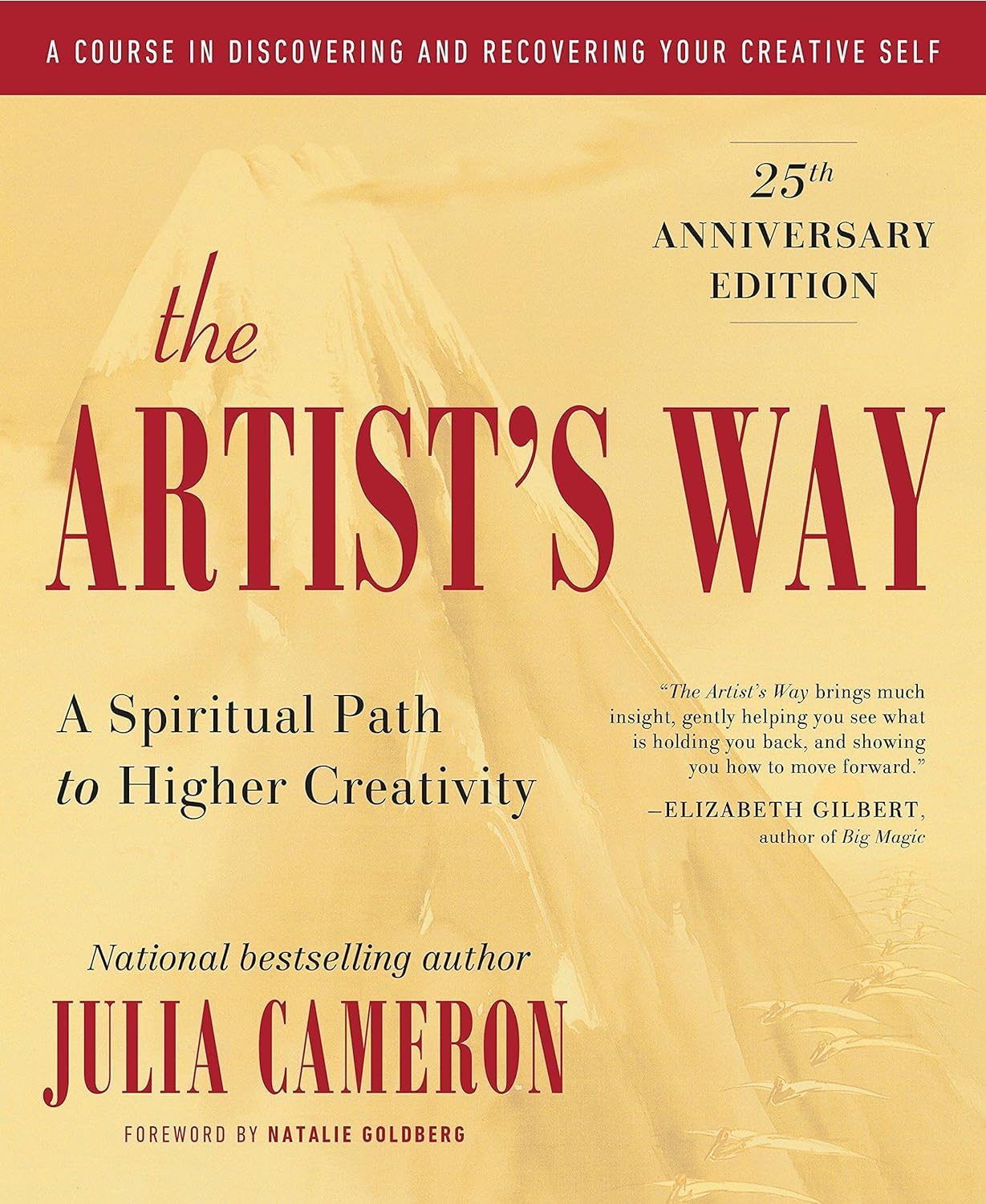
Reading a fellow composer's post today on 'The Achilles Heel of Sour Grapes' (feeling jealous of other's success) made me think of how we view people who complain too much or spread too much negativity, and how that might, unbeknowest to the person involved, inhibit their career. It prompted me to remember a time a dozen years ago when I was going through Julia Cameron's 'The Artist's Way' with a friend. We'd read a chapter every week or two, do some of the creative exercises, and then meet to discuss over coffee.
We got to a chapter that asked you to visualize your dream and write it down. Of course mine had to do with music... and the more I thought about doing the exercise the more angry I felt. I was filled with sour grapes, and then some.
But I went ahead and wrote down my dream, which was, me dressed in a beautiful evening gown, standing on stage in front of a cheering audience on their feet after my world-shattering performance. I read it over. I was mad because despite the years of training and trying that hadn't come true. I cried, I wailed, I slammed a door or two.
After a couple of days of this, I started to think about that vision more deeply.
I realized the goal of that 'critically acclaimed performance' was to prove to aaaaalllllll of the many people in my life who had called me names (school) or put me down (family, work) that they were wrong, wrong, wrong! The vision said, 'Look at me!! I've accomplished something, I'm recognized, I'm 'better than you creeps'! - See how wrong you were to treat me like that?'
Once I had that realization, I really started to see the negativity, the TON of sour grapes, that went into this supposed dream of mine. And I knew then that this was not who I really wanted to be.
I was able to look at this vision again and ask myself what I truly desired. What did my real dream look like?
I'm a music soul. Yes, I'd like to be 'more successful' in terms of paying the bills and saving for retirement and even perhaps have a little recognition in the biz of being a good person, a reliable creative, etc. I believe that comes through continually learning craft, persevering through the doubts and rejection, building skills & experience, and most importantly, creating sincere relationships with other creative/musical people who walk the same path and understand. (It's amazing how much support I see offered in songwriting and composing groups, 50-90, NaNoWriMo, FAWM, TAXI, etc).
But the best thing I learned in this TAW exercise was that my true vision is to wake up and 'be' IN the music everyday. Whether singing, playing, practicing, teaching, performing, reading scores, composing. And that's what I do my best to do. Imperfectly, doubtfully, joyfully.
Failing Faster
Three days ago I had a cue rejected. I was quite proud of this cue. It had been forwarded for consideration to a music library, and a different A&R person whom I was speaking to about another topic, took a moment to congratulate me on that forward. I'd placed the track first on my website and waited the results of a submission of this same cue to another opportunity. Then the results came. It was rejected, and not because it didn't quite fit the needs of the brief. Because it was 'too synthy' and the bass 'overpowered the track' etc. Whaaat?.... :/
Needless to say, I felt quite demoralized. I felt like giving up. Again. I was emotionally attached to this cue and felt confused by the conflicting reactions to it. That sneaky little voice inside of me piped up and said 'what's the point?'
Instead of listening to that voice, I decided I needed help. So I looked around for some. I found someone talking about Failing Faster. It started to make sense. I was putting far too much weight on the fate of one cue. The fact is, as Julia Cameron says in 'The Artist's Way,' we have to be willing to fail on the road to being good. But more than that.
We have to do two things:
-keep trying, whether it's good or bad, because each failure is an experience that, somewhere down the road, will be the foundation for something better;
-as much as possible, learn from each failure.
We need to do the legwork too. Study, practice, research, try again. Listen to what succeeded and ask what distinguishes it.
Very quickly, instead of going to bed sadly, I was at the controller playing chords and developing a melody and strings to support it. Sketched it out, went to sleep happy.
The next day, I worked on a new track, an old school spy piece. Didn't come out too right, I struggled with the brass. But I wrote some lively counterpoint and in the hands of someone better at that sort of thing, it might sound cool. Maybe even me, in time, when I have increased my skill level...
My goal of working diligently on music for 90 mins to 2 hours per day [on the days when Life/Work allows], is all very well and good but it needs to include education. Watching videos, listening to music, practicing playing live instruments, etc.
I reminded myself besides keyboard I have guitar, mandolin, violin and baritone ukulele to practice. Yay! The more live instruments in my cues, the better :) No more 'synthy'! (I hope, lol)
"I've missed more than 9000 shots in my career. I've lost almost 300 games. 26 times, I've been trusted to take the game winning shot and missed. I've failed over and over and over again in my life. And that is why I succeed." - Michael Jordan
Needless to say, I felt quite demoralized. I felt like giving up. Again. I was emotionally attached to this cue and felt confused by the conflicting reactions to it. That sneaky little voice inside of me piped up and said 'what's the point?'
Instead of listening to that voice, I decided I needed help. So I looked around for some. I found someone talking about Failing Faster. It started to make sense. I was putting far too much weight on the fate of one cue. The fact is, as Julia Cameron says in 'The Artist's Way,' we have to be willing to fail on the road to being good. But more than that.
We have to do two things:
-keep trying, whether it's good or bad, because each failure is an experience that, somewhere down the road, will be the foundation for something better;
-as much as possible, learn from each failure.
We need to do the legwork too. Study, practice, research, try again. Listen to what succeeded and ask what distinguishes it.
Very quickly, instead of going to bed sadly, I was at the controller playing chords and developing a melody and strings to support it. Sketched it out, went to sleep happy.
The next day, I worked on a new track, an old school spy piece. Didn't come out too right, I struggled with the brass. But I wrote some lively counterpoint and in the hands of someone better at that sort of thing, it might sound cool. Maybe even me, in time, when I have increased my skill level...
My goal of working diligently on music for 90 mins to 2 hours per day [on the days when Life/Work allows], is all very well and good but it needs to include education. Watching videos, listening to music, practicing playing live instruments, etc.
I reminded myself besides keyboard I have guitar, mandolin, violin and baritone ukulele to practice. Yay! The more live instruments in my cues, the better :) No more 'synthy'! (I hope, lol)
"I've missed more than 9000 shots in my career. I've lost almost 300 games. 26 times, I've been trusted to take the game winning shot and missed. I've failed over and over and over again in my life. And that is why I succeed." - Michael Jordan
Worthiness
I've often felt like an imposter. Especially when I was in the depths of my social phobia days, it always felt like everyone else knew what they were doing and I was the only one hanging on by my fingernails, trying to get it right but feeling like I never would. When I first started teaching singing I wondered what the heck I knew and worried I wasn't good enough. Over the years I've come to a place where I recognize that who I am is exactly is what is of value. The difference between me and any other voice teacher, aside from technique, is just that I am me, I walked my path, and I share my story with my students. Ergo, the difference between me and any other composer isn't just gear and skill set and genres. I hear sounds the way I hear sounds, and create musical collages with that sound, even if it's within the framework of a genre or subgenre, it's unique to me. It's me.
I learned this very well in a writing group I belonged to for a time. We'd all be given a theme (genre) and given five things we needed to incorporate into our story, and then we'd write for 5 minutes. Even with all those ingredients, every story was so markedly different from everyone else's it helped me to realize that my muse is unique to me.
I often tell my students, a singer sings. A writer writes. A painter paints. A composer composes. We do the art for arts sake, because it lights us up inside and therefore is meaningful. If someone buys what we produce, that's cool. We need to eat. But that's not why we do it. Added to that is the willingness to listen and learn from others on the path, and a humble knowledge that our skill set now is better than it was six months ago, whether or not it is yet recognized by the 'experts' or our 'success' in 'selling' our 'product' is spotty at best.
That's not being an imposter, it's being an artist on the path to being a better artist ~
I learned this very well in a writing group I belonged to for a time. We'd all be given a theme (genre) and given five things we needed to incorporate into our story, and then we'd write for 5 minutes. Even with all those ingredients, every story was so markedly different from everyone else's it helped me to realize that my muse is unique to me.
I often tell my students, a singer sings. A writer writes. A painter paints. A composer composes. We do the art for arts sake, because it lights us up inside and therefore is meaningful. If someone buys what we produce, that's cool. We need to eat. But that's not why we do it. Added to that is the willingness to listen and learn from others on the path, and a humble knowledge that our skill set now is better than it was six months ago, whether or not it is yet recognized by the 'experts' or our 'success' in 'selling' our 'product' is spotty at best.
That's not being an imposter, it's being an artist on the path to being a better artist ~
Colouring outside the 'lines'
Sometimes when I think about composing music for the production music industry... I wonder if I’ll ever find a way to fit in.
Don’t get me wrong, I have placements in various tv shows, but is my manner of creating music getting in my way? And if it is, can I actually change it and continue to enjoy what I’m doing. Good question.
I have no real issue these days with mixing. Even though I still feel in the dark when I read articles in places like Recording Magazine... I understand like, one tenth of what most of them are talking about when it comes to composition and production... I still manage to make deals with some of the tracks I write. It’s just that most of my cues are developed through experimentation. Like a good chef, I start with the bare ingredients and then follow my instincts and my delight in choosing and placing sounds. I hear melodies in percussive elements, in how they work together and how they answer each other. I’ve learned others don’t hear these ‘beat melodies’ like I do.
Recently, when I was participating in FAWM (February is Album Writing Month), I told myself to just let go and play. I had great fun and I really like some of the tracks I created. I know the B section is too different from the A section on this one... or that that one is ‘too far outside the lines’... but I was like a kid with finger paints and had a great time. Making music has to have some element of play! As for melodies? I just have to make them more... visible ~
Don’t get me wrong, I have placements in various tv shows, but is my manner of creating music getting in my way? And if it is, can I actually change it and continue to enjoy what I’m doing. Good question.
I have no real issue these days with mixing. Even though I still feel in the dark when I read articles in places like Recording Magazine... I understand like, one tenth of what most of them are talking about when it comes to composition and production... I still manage to make deals with some of the tracks I write. It’s just that most of my cues are developed through experimentation. Like a good chef, I start with the bare ingredients and then follow my instincts and my delight in choosing and placing sounds. I hear melodies in percussive elements, in how they work together and how they answer each other. I’ve learned others don’t hear these ‘beat melodies’ like I do.
Recently, when I was participating in FAWM (February is Album Writing Month), I told myself to just let go and play. I had great fun and I really like some of the tracks I created. I know the B section is too different from the A section on this one... or that that one is ‘too far outside the lines’... but I was like a kid with finger paints and had a great time. Making music has to have some element of play! As for melodies? I just have to make them more... visible ~
Hang on to your dreams
When I was young and in school, I was labelled as a 'day dreamer'. I saw the world in my own way. I thought about that tonight as I watched a movie about a child who could not read due to dyslexia. He engaged with the world differently than others but if someone had cared to look beyond what is considered “normal” they might have seen his intelligence, which was clearly demonstrated in his interests.
As a child I needed glasses, and later I had hearing problems, and on top of that I was terribly shy. Yet I would sit on the swings looking at the blue of the sky and be struck to the heart at how beautiful that color was. I’d look out my window at night at see a canopy of stars and be filled with wonder that I, insignificant and small, could see only a portion of the vastness of space... and ask the age-old question, "Why am I here?"
As I grew up and entered the world, I tried to do ‘normal’ things, always feeling out of touch and like a misfit. I believed the messages I received, that told me I was lazy, stupid, and worthless. I lost my dreams in my struggle to live as I was told I should live. I made choices I regret now but looking back I can see why, for I was fractured and full of self-doubt.
After many years, I managed to find my way back to dreaming. I began to sing. I found a profession in which being extra-sensitive actually makes sense – helping others like me to find their voices. And I began to write, write the music of my dreams, words, notes and sounds. Still after some success I lost my way... a few years ago, after losing my father, I don’t know why, but I stopped dreaming. The stars did not call to me, the sky was cloudy and I went through the motions of living without engaging in creative things.
But then I received a gift. I found a partner and best friend who is also a dreamer, whose heart is as soft as my own, whose eyes move to tears when his heart aches with joy or sadness or hope. I share my perspective with him and he listens. He has urged me over and over again to live my dreams. Finally I listened. I have awoken. Somehow music flows again. Words spill from my fingers.
I paint my days with sound.
Dreaming.
~
As a child I needed glasses, and later I had hearing problems, and on top of that I was terribly shy. Yet I would sit on the swings looking at the blue of the sky and be struck to the heart at how beautiful that color was. I’d look out my window at night at see a canopy of stars and be filled with wonder that I, insignificant and small, could see only a portion of the vastness of space... and ask the age-old question, "Why am I here?"
As I grew up and entered the world, I tried to do ‘normal’ things, always feeling out of touch and like a misfit. I believed the messages I received, that told me I was lazy, stupid, and worthless. I lost my dreams in my struggle to live as I was told I should live. I made choices I regret now but looking back I can see why, for I was fractured and full of self-doubt.
After many years, I managed to find my way back to dreaming. I began to sing. I found a profession in which being extra-sensitive actually makes sense – helping others like me to find their voices. And I began to write, write the music of my dreams, words, notes and sounds. Still after some success I lost my way... a few years ago, after losing my father, I don’t know why, but I stopped dreaming. The stars did not call to me, the sky was cloudy and I went through the motions of living without engaging in creative things.
But then I received a gift. I found a partner and best friend who is also a dreamer, whose heart is as soft as my own, whose eyes move to tears when his heart aches with joy or sadness or hope. I share my perspective with him and he listens. He has urged me over and over again to live my dreams. Finally I listened. I have awoken. Somehow music flows again. Words spill from my fingers.
I paint my days with sound.
Dreaming.
~
Finding the words...
During a recent session with a student we began to talk about what it was like to engage with the world as someone who is shy. Our voices are often so quiet that others may ask us to speak up. Our voices are so soft that others may talk over us. Often we have a ton of things to say but can't formulate them effectively.
Sometimes this fast paced world doesn't seem to have time for a shy speaker. Our opinions and thoughts seem discounted because we can't express them rapidly enough. Our intelligence and sensitivity may, on occasion, not be apparent because we cannot communicate in ways others readily accept or expect.
Even after twenty years of working with shy singers to find their voices, I have moments when I experience an inability to communicate verbally.
Occasionally it's when I'm asked a question that seems like it should have a clear easy 'yes' or 'no' answer, at least in the mind of the questioner. But to me there might be many aspects to the issue and I cannot find a simple way to respond. This moment will also be full of tension, as in the past I had a bully of a boss who demanded a reply immediately upon asking a question, he was also a side-swiper and would ask questions in a certain way in order to manipulate the answer. So now, on occasions when the answer to a question requires more thought, I will feel stymied and unable to respond in any intelligent way. I've had to work on identifying those moments, encouraging myself to say: 'just a sec, I need a minute to think about this'.
But I truly get speechless when something really matters to me. I've talked to some of my students about this and found that they have a similar experience. It's almost like being a child before language is learned. It's visceral. It's a moment when I feel rather than think. I almost wish I could choose a colour of paint to throw on the wall. There's too much emotional sensation, too much tension. It rises up and chokes the throat.
If one has an understanding listener, they may help identify the moment by gently saying 'relax, take your time'. If not, I will sometimes give a pat answer that makes little sense or even is not always true, because I felt inwardly that the safest option was to respond with something other than silence. It's hard to look at this and know that somewhere along the line, listening to your own internal voice and making choices for yourself became too dangerous. That's why even as an adult, a shy person may not be able to instantly respond to what appears to be a simple question. Logically, they may understand they are safe, that they have the right to speak their truth and be heard. But emotionally, they may still struggle to speak.
For me I think the way to work on this issue is to become aware of the programmed response, identifying it when possible and asking, with dignity, for time to reply. Sometimes the realization will not occur until after the event, but I can look back and see what happened, and check in with myself in future when I start to feel that first sense of uncomfortableness, asking myself, 'do I need more time or a little space right now'. I want to respect the desire of the other person to communicate. I want to open to them and show them who I am. I don't want to shy away from that connection. But I have to build that bridge through awareness and positive self-talk.
I thank those who are patient and loving enough to wait for me to find the words x
Sometimes this fast paced world doesn't seem to have time for a shy speaker. Our opinions and thoughts seem discounted because we can't express them rapidly enough. Our intelligence and sensitivity may, on occasion, not be apparent because we cannot communicate in ways others readily accept or expect.
Even after twenty years of working with shy singers to find their voices, I have moments when I experience an inability to communicate verbally.
Occasionally it's when I'm asked a question that seems like it should have a clear easy 'yes' or 'no' answer, at least in the mind of the questioner. But to me there might be many aspects to the issue and I cannot find a simple way to respond. This moment will also be full of tension, as in the past I had a bully of a boss who demanded a reply immediately upon asking a question, he was also a side-swiper and would ask questions in a certain way in order to manipulate the answer. So now, on occasions when the answer to a question requires more thought, I will feel stymied and unable to respond in any intelligent way. I've had to work on identifying those moments, encouraging myself to say: 'just a sec, I need a minute to think about this'.
But I truly get speechless when something really matters to me. I've talked to some of my students about this and found that they have a similar experience. It's almost like being a child before language is learned. It's visceral. It's a moment when I feel rather than think. I almost wish I could choose a colour of paint to throw on the wall. There's too much emotional sensation, too much tension. It rises up and chokes the throat.
If one has an understanding listener, they may help identify the moment by gently saying 'relax, take your time'. If not, I will sometimes give a pat answer that makes little sense or even is not always true, because I felt inwardly that the safest option was to respond with something other than silence. It's hard to look at this and know that somewhere along the line, listening to your own internal voice and making choices for yourself became too dangerous. That's why even as an adult, a shy person may not be able to instantly respond to what appears to be a simple question. Logically, they may understand they are safe, that they have the right to speak their truth and be heard. But emotionally, they may still struggle to speak.
For me I think the way to work on this issue is to become aware of the programmed response, identifying it when possible and asking, with dignity, for time to reply. Sometimes the realization will not occur until after the event, but I can look back and see what happened, and check in with myself in future when I start to feel that first sense of uncomfortableness, asking myself, 'do I need more time or a little space right now'. I want to respect the desire of the other person to communicate. I want to open to them and show them who I am. I don't want to shy away from that connection. But I have to build that bridge through awareness and positive self-talk.
I thank those who are patient and loving enough to wait for me to find the words x
Subscribe to:
Posts (Atom)